Our Materials

What you sleep on matters.
Every material we use earns its place — chosen not for labels, but for how it regulates temperature, relieves pressure, manages moisture, and improves with time.
Our Approach
We choose materials for midnight comfort, not for display.
Most bedding materials are selected for how they photograph, how cheaply they can be produced, or how many certifications they carry. We start somewhere different: how does this material perform during the deepest phase of your sleep? Does it move heat? Wick moisture? Relieve pressure without breaking down?
Natural fibers have been regulating human sleep for thousands of years. We use modern construction to unlock what they do best.

Core Material
Merino Wool
Temperature + Pressure
Merino wool is the most versatile natural sleep fiber we work with. Each fiber actively regulates body temperature — absorbing moisture vapor and releasing heat when you're warm, insulating when you're cool. It's why wool sleepers report fewer wake-ups from overheating than with any synthetic fill.
Unlike foam, wool fibers are naturally resilient. They compress under pressure and spring back — providing consistent support to hips, shoulders, and lower back without breaking down over months. Our wool is hand-selected New Zealand Merino, chosen for fiber length and crimp.
Found In

Foundation Material
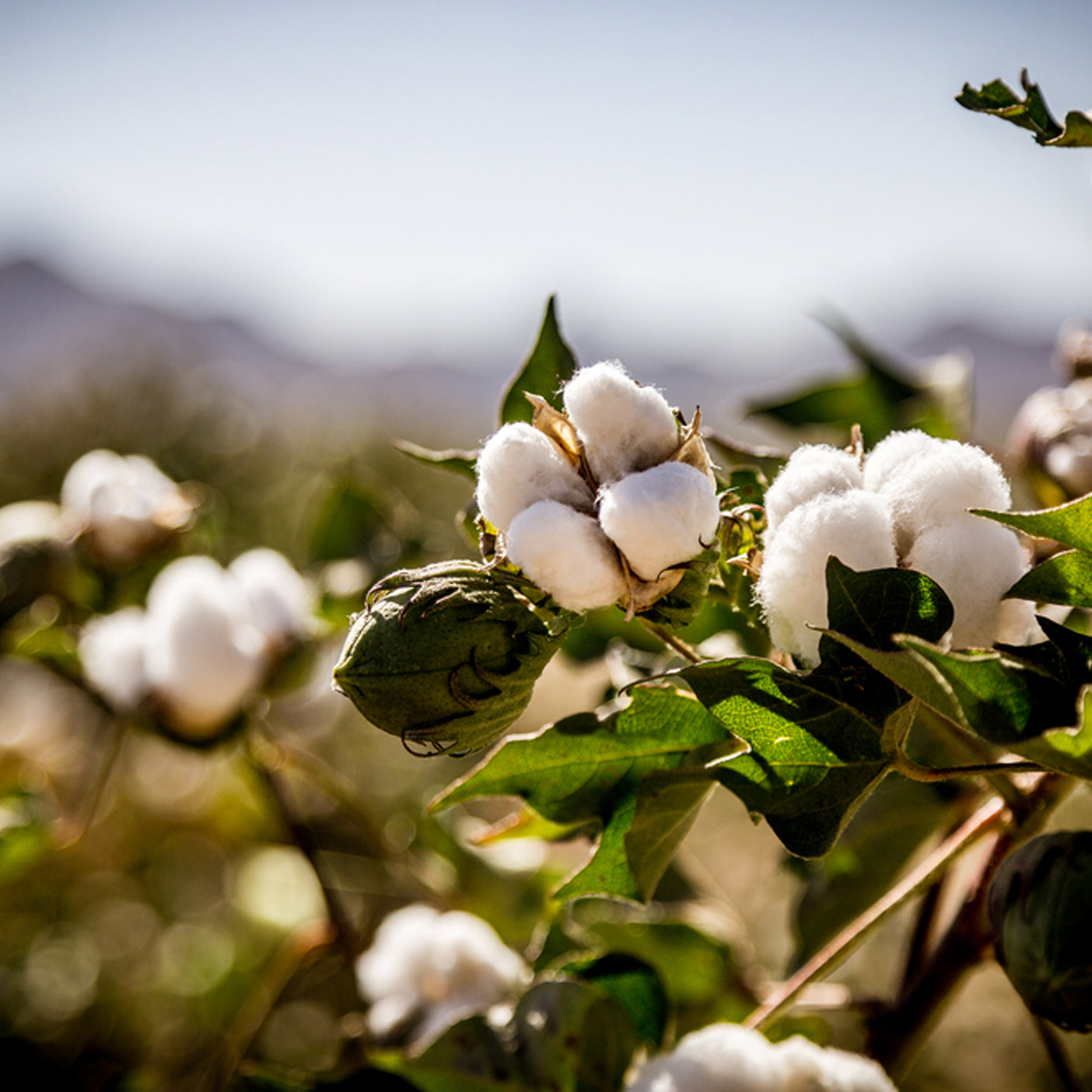
Organic Cotton
Feel + Airflow
Cotton is the surface closest to your skin all night. The difference between restless and restful often comes down to fiber length, weave structure, and how the fabric manages airflow. We use exclusively GOTS-certified long-staple organic cotton — the top 3% of global cotton production — in two distinct weaves, each designed for a different sleep experience.
Long-staple fibers create a smoother, stronger yarn that resists pilling and gets softer with every wash instead of breaking down. No chemical softeners. No synthetic finishes. Just fiber quality and weave engineering working together.
Found In

Cooling Specialist
Bamboo
Moisture + Cooling
Bamboo fibers wick moisture faster than cotton — drawing sweat away from the skin and evaporating it before it disrupts sleep. The result is a surface that feels consistently cool and dry, even on the warmest nights. For hot sleepers, bamboo is often the single most impactful material change they can make.
Our bamboo is USDA organic — grown without synthetic pesticides or fertilizers. The fibers are naturally silky-smooth with a drape that feels like a luxury sateen, but cooler and more breathable. Gentle enough for the most sensitive skin.
Found In

Core Material
TENCEL™
Moisture + Feel
TENCEL™ Lyocell is derived from sustainably harvested eucalyptus wood pulp, processed in a closed-loop system that recovers and reuses 99% of solvents. The result is a fiber that's exceptionally smooth, temperature-neutral, and naturally moisture-managing.
TENCEL provides a gentle, breathable surface that works particularly well for sleepers with sensitive or reactive skin. It absorbs moisture more efficiently than cotton, keeping the sleep surface drier and cooler without the slick feel of synthetics.
Found In
How It's Built
Materials are only half the story.
How a material is woven, stitched, and constructed determines how it performs through the night. The same cotton fiber can sleep hot or cool depending on the weave. Here's what we choose, and why.


Certified Standards
The standards behind how it feels.
Every Delara product meets some of the world's most rigorous material and production standards. These aren't marketing badges — they're the reason our bedding feels cleaner, lasts longer, and sleeps better from night one.


Material × Product
What’s in your bedding
A quick reference for which materials appear in each product — so you can choose the layers that match how you sleep.
| Product | Merino Wool | Organic Cotton | Bamboo | TENCEL™ | Recycled DA |
|---|---|---|---|---|---|
| Wool Duvet Climate layer | — | — | — | ||
| Organic Cotton Duvet Climate layer | — | — | — | — | |
| DA Duvet Climate layer | — | — | — | ||
| 3" Wool Mattress Pad Support layer | — | — | — | ||
| Organic Mattress Pad Support layer | — | — | — | — | |
| Percale Sheet Set Foundation | — | — | — | — | |
| Sateen Sheet Set Foundation | — | — | — | — | |
| Bamboo Sheet Set Foundation | — | — | — | — | |
| Adjustable Pillows Calming touchpoint | — | — | — | ||
| DA Pillow Calming touchpoint | — | — | — | ||
| Bath Towels Wind-down | — | — | — | — |
Common Questions
Materials, answered.
The questions we hear most about what goes into your sleep.
Why wool for bedding? Doesn't it sleep hot?
It's the most common misconception about wool. Merino wool is one of the most effective thermoregulating fibers in nature — it absorbs moisture vapor and releases heat when you're warm, and insulates when you're cool. Clinical studies show wool sleepers spend more time in optimal temperature range and wake less frequently than those using synthetic fills.
What's the difference between percale and sateen?
They're both 100% organic cotton, but the weave changes everything. Percale uses a one-over, one-under weave that's open, breathable, and crisp — ideal for hot sleepers. Sateen uses a four-over, one-under weave that's silkier, slightly warmer, and has a subtle sheen — better for cooler months or those who prefer a smoother drape.
How is bamboo different from cotton for sheets?
Bamboo wicks moisture faster and feels cooler against the skin. It has a naturally silky hand feel similar to sateen but with better moisture management. If you're a hot sleeper who also prefers a smooth (rather than crisp) texture, bamboo may be your best match. Cotton percale is the better choice if you prefer a lighter, crisper feel.
Will your sheets actually get softer over time?
Yes — and this is one of the key advantages of long-staple organic cotton. Longer fibers produce smoother yarn that relaxes with washing rather than breaking down. Shorter fibers (common in conventional cotton) pill and stiffen. Our sheets are designed to peak in softness after 5-10 washes and maintain that quality for years.
What does GOTS certification actually mean?
GOTS (Global Organic Textile Standard) is the world's leading certification for organic textiles. It verifies the entire supply chain — from how the cotton is grown (no synthetic pesticides, no GMOs) to how the fabric is processed (no harmful chemicals, fair labor conditions). It's the most comprehensive standard in the industry, covering both environmental and social criteria.
How do I choose between a wool duvet and a cotton duvet?
Wool is the more versatile choice — it actively regulates temperature across seasons and works well for both warm and cool sleepers. The cotton duvet is lighter and more breathable, making it ideal for warm climates or sleepers who prefer minimal weight. If you run hot in summer but cold in winter, consider our 3-in-1 wool comforter — two weights that snap together for full seasonal flexibility.

Feel the difference our materials make.
Every layer we make is designed around how your body actually sleeps.